What Is Dyslexia?
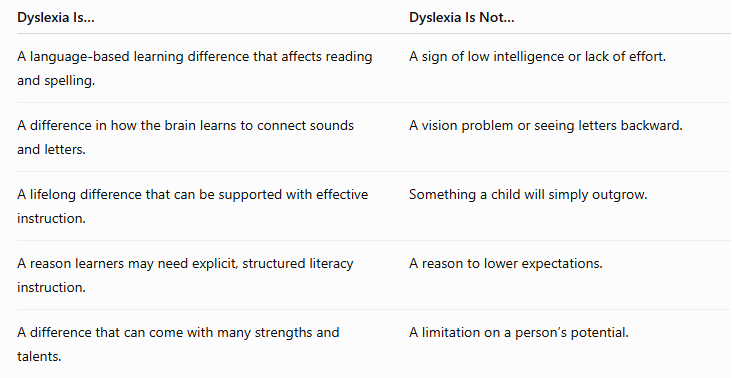
Dyslexia is a common learning difference that can make reading, spelling, and working with written words more challenging. It is a language processing difference that affects how the brain learns, organizes, and processes the sounds of language. Dyslexia is neurobiological and often genetic, meaning it is connected to how the brain develops and can run in families. Many individuals with dyslexia have a parent, sibling, or relative who also experienced challenges with reading or spelling.
Individuals with dyslexia are often bright, creative, and capable learners, but they may need a different approach to learning how to read.
With the right support and explicit, structured literacy instruction, individuals with dyslexia can build strong reading skills, grow their confidence, and become successful readers.
Dyslexia does not define a learner’s ability. With the right support, individuals with dyslexia can become confident, successful readers.

What Is Dyslexia Therapy?
Dyslexia therapy is specialized reading instruction designed to help children with dyslexia learn how to decode (read) and spell words. Using a structured, multisensory approach based on the Orton-Gillingham methodology, instruction from a Certified Academic Language Therapist (CALT) helps students with dyslexia make connections between sounds, letters, and words while building confidence and strong reading skills.
Dyslexia Therapy: What to Expect
Dyslexia therapy requires consistent, intensive support to provide the gold standard of instruction.
Clients typically meet with a Certified Academic Language Therapist (CALT) 3–4 times per week for approximately 50–60 minutes per session.
Therapy is diagnostic and prescriptive, meaning instruction is tailored to each learner’s individual needs and progress.
CALTs follow a structured, systematic approach, moving as quickly as a student is ready and as slowly as needed to ensure skills are developed accurately and confidently.
Dyslexia therapy builds skills over time, and many clients work with a CALT for 2–3 years to develop strong foundational reading, spelling, and language skills.
Note: Dyslexia therapy is provided virtually. Virtual sessions help families accommodate busy schedules while maintaining the consistency and frequency needed for effective instruction and progress.

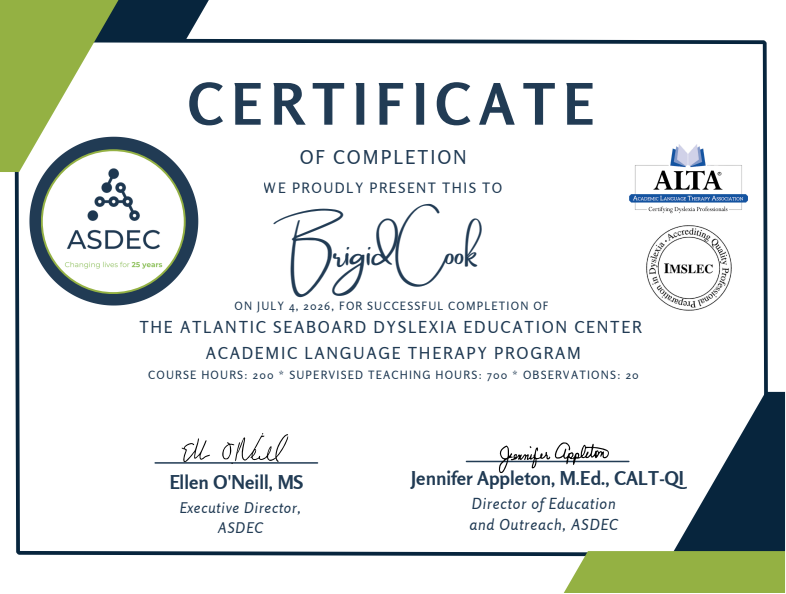
The Certified Academic Language Therapist (CALT) credential represents the gold standard of dyslexia therapy training and certification. My CALT training has strengthened my ability to provide evidence-based literacy instruction for learners with dyslexia and other language-based learning differences.
Completed 700 hours of supervised clinical experience working directly with learners.
Completed 200+ hours of specialized instructional training in structured literacy methods.
Trained in providing diagnostic and prescriptive instruction using a structured, multisensory approach grounded in the Science of Reading.
Help students develop the skills needed to decode, spell, and understand the structure of language.
Combine rigorous training with personal experience, advocacy, and a passion for helping learners build confidence.
My goal is to help students recognize that dyslexia is not a limitation—it is a different way of learning that can be supported with the right instruction, strategies, and encouragement.